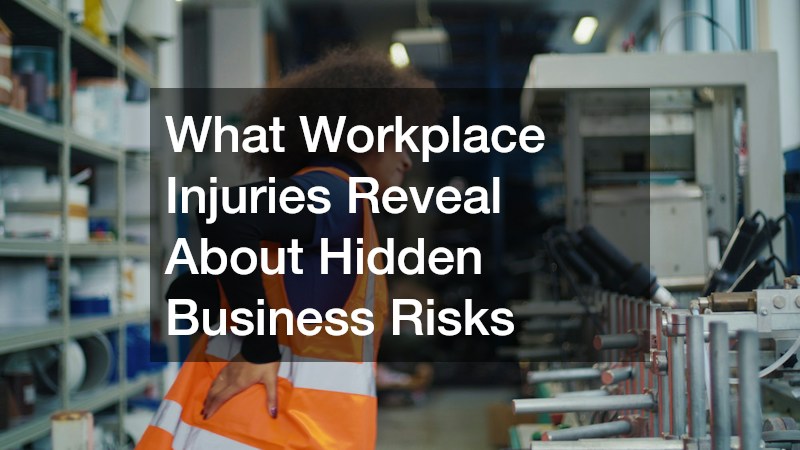
A single workplace injury rarely stays a single, isolated event. Behind the scenes, it often points to outdated equipment, poor training, sloppy maintenance schedules, or weak safety oversight that has been quietly building toward a bigger problem. Understanding what these incidents reveal can help employees protect themselves and help business owners catch dangerous patterns before they escalate. This article breaks down the hidden risks workplace injuries expose and what steps matter most after one occurs.
Recognizing Early Warning Signs on a Job Site
Most serious workplace injuries do not happen out of nowhere. They are usually preceded by near misses, informal complaints, or small incidents that get dismissed as bad luck rather than treated as data. When a company tracks these smaller events, patterns tend to emerge that point directly to a larger structural or procedural issue. Ignoring these early signals is often the first domino that leads to a major accident.
Employees are frequently the first to notice when something feels unsafe, yet their concerns do not always reach decision-makers in time. A culture that discourages reporting, even informally, allows risk to compound quietly. Businesses that take early warning signs seriously tend to see fewer catastrophic failures down the line.
- Repeated equipment malfunctions that get patched instead of replaced
- Workers voicing concerns about rushed timelines or understaffing
- Minor slips, trips, or strains that go unreported
- Safety gear that is missing, damaged, or outdated
- Supervisors overriding safety protocols to meet deadlines
How Construction Sites Expose Deeper Safety Gaps
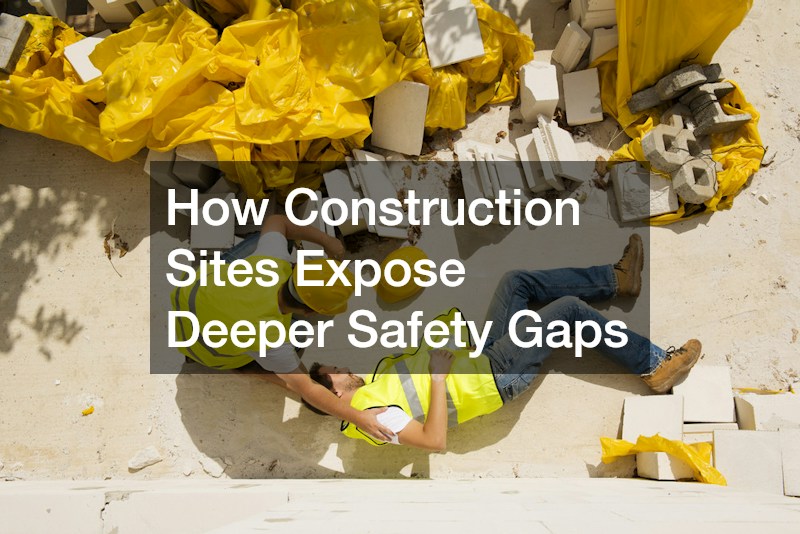
Construction environments are particularly revealing because so many moving parts have to function correctly at once, from scaffolding stability to crane operation to proper fall protection. A single oversight, like a missing guardrail or an improperly secured ladder, can set off consequences that ripple across an entire site. When an injury happens, it often uncovers a chain of smaller failures, such as inadequate training, skipped inspections, poorly maintained equipment, or subcontractors cutting corners to meet tight deadlines. These sites also involve multiple parties working simultaneously, including general contractors, subcontractors, equipment suppliers, and site owners, which can make it genuinely difficult to figure out who was responsible for a particular safety failure. A fall from scaffolding, for example, might stem from faulty assembly by one crew, inadequate inspection by a site manager, or a defective part supplied by a manufacturer. Untangling which party bears liability often requires reviewing safety logs, maintenance records, and contracts that spell out who was responsible for what. Regulatory factors add another layer of complexity, since OSHA standards and local building codes frequently overlap, and a violation of one doesn’t always align neatly with liability under the other. In situations like this, injured workers often need a construction accident lawyer to help untangle liability between contractors, site owners, and equipment manufacturers, and to make sense of overlapping insurance policies that may each try to shift responsibility elsewhere.
Beyond the immediate injury, these cases frequently reveal that safety protocols existed on paper but were never consistently enforced. A documented policy means little if supervisors allow shortcuts when deadlines tighten. A fall protection plan that requires harnesses above six feet, for instance, does nothing if crews routinely skip tie-off procedures to finish a task before a shift ends. This gap between written procedure and daily practice is one of the most common hidden risks in physically demanding industries. Investigators often find that near-misses went unreported for months, that equipment inspections were signed off without being performed, or that new hires received a safety orientation but no follow-up training once they reached the actual job site. The pattern tends to repeat because enforcement often competes directly with productivity incentives. A foreman under pressure to hit a completion date has little motivation to halt work over a missing guardrail, especially if no one has ever been disciplined for overlooking one before. Over time, that silence becomes its own unwritten policy, one that only surfaces after an incident forces a closer look.
What Vehicle Related Incidents Say About Operational Oversight
Many workplaces rely on vehicles, whether it is delivery trucks, forklifts, or employee-driven company cars, and these introduce a distinct category of risk that is easy to overlook. A car accident involving an employee during work hours can expose gaps in driver training, vehicle maintenance schedules, or unrealistic delivery timelines that pressure workers to speed. Even something as routine as a missed oil change or worn brake pads can escalate into a liability issue when a vehicle is being used for business purposes. These incidents are rarely just about one driver making a mistake in the moment. They often trace back to a company culture that prioritized speed over safety checks, whether that means skipping pre-trip inspections, ignoring hours-of-service limits, or rewarding employees for fast turnaround over careful driving. A single near-miss report that gets dismissed as inconsequential can be a warning sign of a larger systemic pattern. Determining fault in these cases is rarely straightforward. A car accident lawyer can help sort through questions of whether liability falls on the driver, the employer, or both, especially when factors like vehicle upkeep or scheduling pressure played a role. Dash cam footage, maintenance logs, and dispatch records often become key evidence in untangling what actually happened. Beyond the immediate legal exposure, vehicle incidents tend to ripple outward into insurance premiums, regulatory scrutiny, and public reputation. A business that experiences repeated vehicle-related injuries may find itself facing higher coverage costs or closer attention from safety regulators. Treating each incident as an isolated event, rather than a potential signal of operational weakness, is often where companies go wrong.
Fleet-related injuries also tend to reveal whether a business has adequate insurance coverage and clear reporting procedures. A delivery driver injured in a collision, for instance, may trigger questions about commercial auto policy limits, workers’ compensation coordination, and whether the vehicle was properly maintained and inspected. Companies that lack a structured response plan often struggle when an incident occurs, leaving injured employees uncertain about their options and supervisors scrambling to piece together what happened. The gaps usually show up in predictable places: no designated point of contact for reporting the incident, no standardized form for capturing details like time, location, and witnesses, and no clear line of communication between HR, insurance carriers, and legal counsel. Without these pieces in place, even minor accidents can spiral into prolonged disputes or missed compliance deadlines. A clear, documented process protects both the worker and the business when something goes wrong on the road. This typically includes immediate medical attention protocols, a straightforward incident reporting form, a timeline for notifying insurers, and a review step to determine whether the incident points to a broader issue, such as driver fatigue, inadequate training, or a vehicle maintenance shortfall. Businesses that build these steps into routine operations are far better positioned to respond quickly and avoid the confusion that often follows an unplanned event.
- Missed or delayed vehicle maintenance checks, often traced back to no centralized tracking system for mileage or service intervals
- Drivers pushed to meet unrealistic delivery windows, leading to speeding, fatigue, and skipped pre-trip inspections
- Lack of formal training for employees operating company vehicles, including no defensive driving refreshers or equipment-specific instruction
- Unclear policies on who is liable during work related travel, especially during commutes, personal errands mid-shift, or use of personal vehicles for business
- Inconsistent incident reporting after minor collisions, which hides patterns that could flag a problem driver or a troublesome route
- Little to no use of telematics or dash cams, leaving no objective data to assess fault or coach risky driving habits
- No clear accountability chain for vehicle upkeep, so maintenance issues fall through the cracks between drivers, dispatch, and management
Why Slip and Fall Cases Point to Facility Management Failures
Slip and fall incidents are often dismissed as minor, but they frequently reveal systemic issues with how a facility is maintained. Wet floors without warning signs, poor lighting, cluttered walkways, or uneven flooring are not random occurrences, they are the result of inconsistent maintenance routines or inadequate facility budgets. When these injuries happen repeatedly in the same location, it is a strong sign that management has not addressed a known hazard. Consulting the best slip and fall attorney available can help injured individuals understand whether negligence played a role in their specific case.
These cases also highlight how businesses sometimes underinvest in basic upkeep while focusing resources elsewhere. A facility that looks fine on the surface can still have hazards that only become obvious after someone gets hurt. Regular inspections and prompt repairs are far less costly than the long-term consequences of a preventable injury.
How Manufacturing Partnerships Introduce Unexpected Liability
Businesses that rely on outside manufacturers to produce their goods often assume that safety responsibility stays with their own facility, but that assumption can be dangerously incomplete. When a company works with contract manufacturing partners, injuries that occur during production can expose weaknesses in oversight, equipment standards, or quality control that neither party anticipated. A business may have excellent safety standards internally while a manufacturing partner operates under very different conditions. This mismatch often only becomes visible after an injury forces a closer look at how the partnership actually functions day to day.
These arrangements also complicate accountability because multiple companies may share responsibility for the same production line or product. Clear contracts, regular audits, and shared safety expectations can help close these gaps before they lead to harm. Businesses that treat manufacturing partners as an extension of their own safety culture tend to avoid these blind spots altogether.
Steps to Take Immediately After Getting Hurt at Work
What an injured worker does in the hours and days following an incident can significantly affect both their health outcome and their ability to seek compensation later. Documentation matters enormously, since memories fade and physical evidence like spills or broken equipment can be cleaned up or repaired quickly. Seeking medical attention immediately, even for injuries that seem minor, creates a paper trail that becomes important later. Many injured employees are surprised to learn how much their initial response shapes the outcome of their claim.
- Report the injury to a supervisor in writing, not just verbally
- Take photos of the scene, equipment, or hazard involved
- Get a written medical evaluation as soon as possible
- Collect contact information from any witnesses present
- Keep copies of all paperwork related to the incident
When to Involve Legal Support for a Workplace Claim
Not every workplace injury requires legal intervention, but certain situations make professional guidance genuinely valuable. Cases involving long-term disability, disputed liability, or employer retaliation tend to be far more complicated than a straightforward claim. Personal injury lawyers can help injured workers understand whether a settlement offer is fair or whether their case warrants further negotiation. Having experienced guidance early in the process often prevents workers from accepting less than what their situation actually justifies.
Timing also matters significantly, since many claims have strict deadlines for filing. Waiting too long to seek advice can limit the options available, even in cases with strong evidence. A brief consultation early on costs little and can clarify what steps make the most sense moving forward.
Workplace injuries are rarely just bad luck, they are often the visible symptom of risks that have been building quietly for months or years. Recognizing these patterns, whether in equipment maintenance, vehicle policies, facility upkeep, or manufacturing partnerships, gives both workers and employers a chance to address problems before they cause serious harm. If you or someone you know has been injured on the job, start by documenting everything and seeking proper medical care right away. From there, a brief conversation with a qualified professional can help clarify your options and protect your long-term interests.